Checkout Champions: Fixing the £18 Billion Problem British E-commerce Can't Afford to Ignore
The Great British Checkout Exodus
Every day, millions of British consumers fill their digital shopping baskets, proceed to checkout, and then vanish without completing their purchase. Recent studies indicate that cart abandonment rates in the UK hover around 70%, representing approximately £18 billion in lost revenue annually. For British SMEs operating on tight margins, this represents a catastrophic leak in their sales funnel that many businesses remain blissfully unaware of.
The checkout process has become the digital equivalent of a queue that's simply too long, too complicated, or too uncertain for customers to endure. Yet unlike physical retail environments where businesses can immediately observe customer frustration, online abandonment happens silently, leaving business owners wondering why their conversion rates remain stubbornly low despite healthy traffic figures.
The British Consumer's Payment Preferences
British shoppers have developed distinct preferences shaped by decades of high street banking culture and recent fintech innovations. Traditional payment gateways that work perfectly well in other markets often create friction for UK consumers who expect to see familiar logos and trusted payment methods.
PayPal remains the gold standard for online payments among British consumers, with recognition rates exceeding 95%. However, many SMEs default to their bank's payment gateway or choose providers based purely on transaction fees, overlooking the crucial trust factor. When customers encounter unfamiliar payment processors, abandonment rates spike dramatically.
The rise of Buy Now, Pay Later services has fundamentally altered British shopping behaviour. Klarna, Clearpay, and similar platforms have created expectations around flexible payment options, particularly among younger demographics. Businesses that fail to offer these alternatives often find themselves excluded from consideration entirely, especially for higher-value purchases.
Mobile Checkout: Where Good Intentions Go to Die
With over 60% of UK e-commerce traffic now originating from mobile devices, the mobile checkout experience has become make-or-break for online retailers. Yet many British businesses continue to treat mobile as an afterthought, creating checkout flows optimised for desktop users and then wondering why mobile conversion rates lag behind.
The fundamental challenge lies in translating complex payment forms to smaller screens whilst maintaining security and ease of use. Autofill functionality, which works reliably on desktop browsers, often fails on mobile devices, forcing customers to manually enter lengthy card details on tiny keyboards. Guest checkout options, whilst improving conversion rates, must be balanced against the legitimate business need to capture customer data for future marketing.
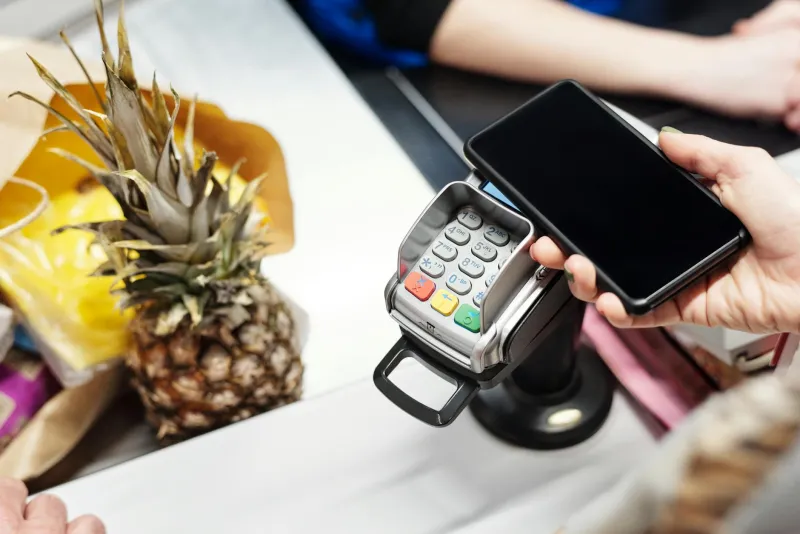
Apple Pay and Google Pay have emerged as game-changers for mobile commerce, reducing checkout friction to a single touch or facial recognition. However, implementation requires technical expertise that many SMEs lack, and the benefits only materialise when the underlying checkout flow has been properly optimised.
 Photo: Apple Pay, via developer.apple.com
The Psychology of Payment Anxiety
British consumers approach online payments with a healthy dose of scepticism born from decades of fraud awareness campaigns and high-profile data breaches. This cultural context means that checkout processes must not only function smoothly but also actively reassure customers about security and legitimacy.
Security badges, whilst often dismissed as superficial, play a crucial psychological role in the British market. Trustmarks from recognised bodies like Trustpilot, Feefo, or industry associations can significantly impact conversion rates. However, these elements must be implemented thoughtfully – cluttering the checkout page with excessive security messaging can create the opposite effect, suggesting the business protests too much.
Transparency around additional costs represents another critical factor. British consumers have been conditioned by airline and ticketing websites to expect hidden charges, making them hypersensitive to unexpected fees. Delivery costs, VAT calculations, and any additional charges must be clearly communicated early in the purchase journey, not revealed as unpleasant surprises during checkout.
Practical Solutions for British SMEs
Addressing checkout abandonment requires a systematic approach that prioritises user experience whilst maintaining business requirements. The first step involves conducting honest audits of existing checkout flows, preferably using real customer feedback rather than internal assumptions.
Streamlining form fields represents low-hanging fruit for most businesses. Every additional field increases abandonment risk, so requirements should be ruthlessly evaluated. Address lookup services using Royal Mail's postcode database can dramatically reduce form completion time whilst improving data accuracy.
 Photo: Royal Mail, via c8.alamy.com
Implementing guest checkout options can improve conversion rates by 20-30%, though this must be balanced against customer acquisition goals. A compromise approach involves offering both guest checkout and account creation, with the latter positioned as optional rather than mandatory.
Payment method diversity should reflect actual customer preferences rather than business convenience. Offering PayPal, major credit cards, and at least one Buy Now, Pay Later option covers the vast majority of British consumer preferences. For B2B transactions, invoice payment options become crucial.
The Revenue Recovery Opportunity
For British SMEs willing to invest in checkout optimisation, the potential returns are substantial. A business with £500,000 annual online revenue and a 70% abandonment rate could theoretically increase revenue by £350,000 through halving abandonment rates – a more realistic goal than it might initially appear.
The key lies in treating checkout optimisation as an ongoing process rather than a one-time fix. Regular testing, customer feedback collection, and performance monitoring ensure that improvements compound over time. Many successful British e-commerce businesses attribute significant portions of their growth to systematic checkout improvements rather than increased marketing spend.
For SMEs operating in competitive markets, superior checkout experiences can become genuine competitive advantages, allowing smaller businesses to outperform larger competitors who may have overlooked these crucial details in favour of broader marketing initiatives.