One Nation, Four Markets: Why a Single Digital Strategy Is Failing British Businesses Beyond the Border
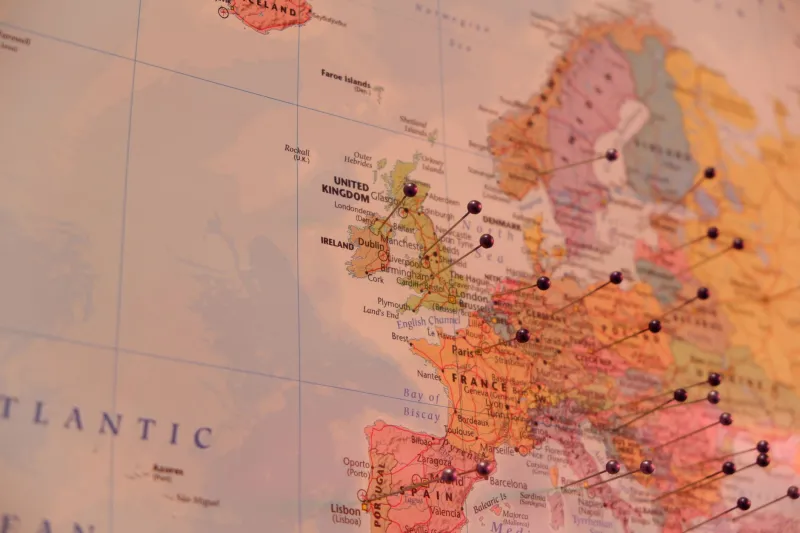
There is a comfortable assumption embedded in much of Britain's digital marketing discourse: that what works in Birmingham will work in Bangor, that a campaign calibrated for Bristol will perform equally well in Ballymena. For the majority of web agencies and in-house marketing teams operating from England, this assumption goes largely unexamined. It is, however, quietly costing businesses in Scotland, Wales, and Northern Ireland a significant amount of money and opportunity.
The United Kingdom is not a homogenous digital market. It never has been. Yet the default tendency to treat it as one persists, and the consequences are measurable.
The Welsh Language Is Not Optional
For businesses operating in Wales, the most immediate and legally significant distinction is linguistic. The Welsh Language (Wales) Measure 2011, combined with ongoing guidance from the Welsh Language Commissioner, means that organisations dealing with the Welsh public — particularly those in regulated sectors or receiving public funding — carry formal obligations around bilingual communication. Even for private businesses without statutory duties, the commercial case for Welsh-language digital provision is compelling.
Approximately 874,000 people in Wales speak Welsh, and research consistently demonstrates that Welsh speakers respond more positively to brands that acknowledge their language. A website that offers a seamless Welsh-language experience — not a perfunctory machine-translated toggle, but genuinely crafted content — signals cultural respect and builds the kind of trust that converts browsers into buyers.
This has technical implications beyond simply translating copy. Bilingual websites require careful consideration of URL structure, hreflang tags, and content management systems capable of handling dual-language publishing workflows. A site built on a platform that cannot accommodate these requirements is not merely inconvenient — it is a structural liability.
Scotland's Distinct Search Landscape
Scotland presents a different but equally significant set of considerations. Scottish consumers demonstrate measurably different search behaviour patterns from their English counterparts, particularly in sectors such as legal services, financial advice, and property — all of which operate under distinct Scottish law. A conveyancing firm in Edinburgh targeting search terms calibrated for an English audience is, in effect, advertising to the wrong market.
Beyond legal distinctions, Scottish national identity carries commercial weight. Businesses that position themselves authentically within Scottish culture — whether through localised content, region-specific case studies, or simply using terminology that resonates north of the border — tend to outperform those that apply a generic British veneer. Google's local search algorithms are increasingly sophisticated in this regard; geographic relevance signals matter, and businesses that invest in genuinely localised content reap the benefit in organic rankings.
There is also the matter of ScotGov-funded digital support schemes, several of which offer grants and subsidies for SME digital development that are entirely separate from UK-wide programmes. Businesses unaware of these resources are leaving money on the table.
Northern Ireland: A Market with Two Audiences
Perhaps the most complex digital environment within the United Kingdom belongs to Northern Ireland. Businesses here face a genuinely dual-market reality: a significant proportion of their potential customers live in the Republic of Ireland, operate in euros, and respond to cultural references that differ markedly from those that resonate in Belfast or Londonderry.
For e-commerce businesses in particular, this cross-border dimension is commercially critical. A Northern Irish retailer that has configured its website exclusively for sterling transactions, UK shipping zones, and HMRC-compliant tax structures may be inadvertently excluding a substantial pool of customers sitting a short drive away. Post-Brexit trading arrangements have added further complexity, particularly for businesses moving goods across the border, and the digital infrastructure of these businesses must reflect that operational reality.
Community sensitivity also matters in ways that are difficult to quantify but impossible to ignore. Imagery, language, and cultural references carry weight in Northern Ireland that they simply do not carry elsewhere. A well-intentioned but culturally unaware campaign can generate friction where none was intended.
Turning Regional Complexity into Competitive Advantage
The instinctive response to this complexity is to treat it as a burden — additional cost, additional compliance, additional content. The more commercially astute response is to recognise it as a barrier that competitors are failing to clear.
In every devolved market, the majority of businesses are applying a generic digital strategy and wondering why their results plateau. The minority that invest in genuine regional specificity — localised keyword research, culturally resonant content, technically appropriate website architecture — find themselves competing in a far less crowded space.
A Scottish tourism operator that produces detailed, locally authentic content about Perthshire walking routes will consistently outrank a national aggregator offering thin, generic descriptions. A Welsh accountancy firm with a fully functional bilingual website will build trust with Welsh-speaking clients that an English-only competitor simply cannot access. A Northern Irish food producer that configures its e-commerce platform for cross-border sales opens a revenue stream that most of its peers have not even attempted to establish.
Practical Steps for Devolved Digital Strategy
For businesses in Scotland, Wales, or Northern Ireland reviewing their digital presence, several immediate actions are worth prioritising.
First, conduct a localised keyword audit. Generic UK search terms frequently mask significant regional variation. Tools such as Google Search Console, segmented by geography, can reveal the specific language your local audience is actually using.
Second, review your website's technical architecture for regional readiness. Bilingual requirements in Wales, cross-border e-commerce in Northern Ireland, and Scotland-specific legal or regulatory content all have structural implications that a standard website template will not accommodate without deliberate configuration.
Third, engage with regional digital support programmes. Business Wales, Scottish Enterprise, and Invest Northern Ireland all offer resources, and in some cases funding, specifically designed to support SME digital development. These programmes exist precisely because devolved governments recognise that a London-calibrated digital economy does not serve their populations adequately.
Finally, consider whether your current web agency genuinely understands your market. An agency headquartered in Manchester or London is not disqualified from serving a Welsh or Scottish client effectively — but they must demonstrate that they have done the work to understand the regional context, not simply transplanted an English strategy with a different postcode.
The digital economy of the United Kingdom is richer, more varied, and more locally specific than a single-strategy approach can capture. The businesses that recognise this earliest will hold an advantage that their competitors will struggle to close.