
The Disproportionate Power of Negative Reviews
British consumers exhibit a peculiar psychological phenomenon when evaluating online reviews: negative feedback carries exponentially more weight than positive testimonials. Research indicates that a single one-star review requires between five and twelve positive reviews to neutralise its impact on purchasing decisions. This mathematical imbalance creates existential threats for small businesses operating on thin margins.
The human brain's negativity bias, evolved as a survival mechanism, translates poorly to modern commercial environments. Where our ancestors needed to prioritise threats over opportunities to survive, today's consumers apply the same mental framework to restaurant choices and service provider selection. The result devastates businesses that have spent years building reputations through quality service.
The British Politeness Paradox
British cultural norms compound this challenge. Satisfied customers rarely feel compelled to leave reviews, viewing the act as unnecessary or boastful. Meanwhile, dissatisfied customers overcome their natural reticence when sufficiently motivated by poor experiences. This creates a systematic bias where negative voices dominate online platforms whilst positive experiences remain unrecorded.
The situation becomes particularly acute for service-based businesses where customer satisfaction depends on subjective factors. A plumber might complete hundreds of successful jobs, but the one customer whose expectations weren't perfectly managed becomes the dominant voice in their online reputation.
Platform Algorithms Amplify Damage
Review platforms compound these psychological biases through algorithmic design. Google My Business, Trustpilot, and industry-specific platforms often prioritise recent reviews, meaning a single negative review can appear prominently whilst older positive feedback gets buried. The algorithms designed to show "helpful" content frequently elevate detailed negative reviews over brief positive ones.
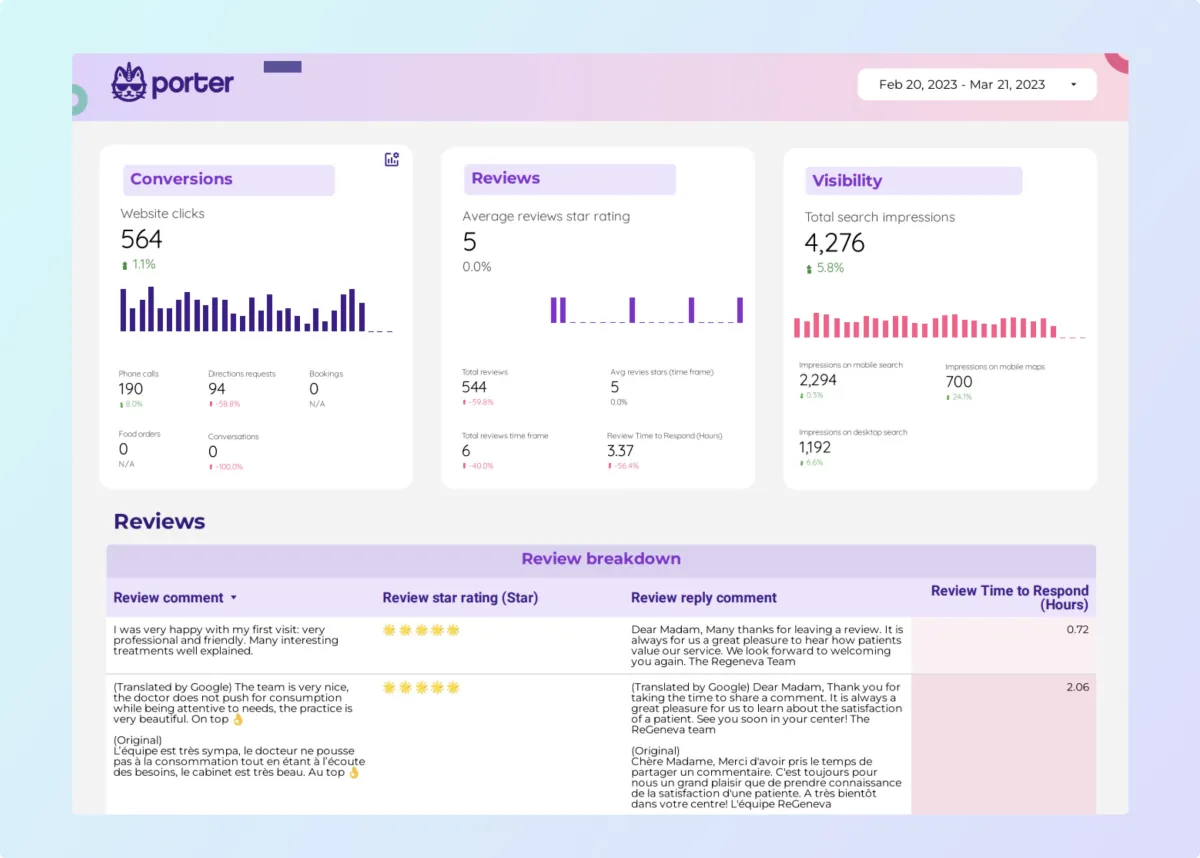 Photo: Google My Business, via portermetrics.com
These systems also struggle with context. A restaurant receiving a one-star review during a staff shortage faces the same algorithmic penalty as one serving consistently poor food. The platform cannot distinguish between temporary operational challenges and fundamental service failures.
The Cascade Effect on Business Operations
Negative reviews trigger cascading effects throughout business operations. Reduced enquiry levels force companies to increase marketing spend to maintain visibility. Lower conversion rates mean businesses must work harder to achieve the same revenue levels. Staff morale suffers when team members feel their efforts go unrecognised whilst criticism receives public attention.
Some businesses develop defensive cultures, prioritising complaint avoidance over service excellence. This risk-averse approach can stifle innovation and reduce the personalised service that originally built their reputation.
Legal Boundaries in UK Review Management
British businesses must navigate complex legal terrain when managing online reviews. The Consumer Protection from Unfair Trading Regulations 2008 prohibit businesses from posting fake positive reviews or commissioning review manipulation services. However, they permit legitimate efforts to encourage satisfied customers to share their experiences.
The key distinction lies in authenticity and transparency. Businesses can request reviews from genuine customers, offer incentives for honest feedback, and provide platforms for testimonials. They cannot create fictional reviews, pay for positive ratings, or suppress legitimate criticism through legal threats.
Defamation law provides some protection against false or malicious reviews, but the burden of proof remains high. Businesses must demonstrate that statements are factually incorrect and damaging to reputation. Opinions, however negative, generally receive protection under freedom of expression principles.
Strategic Response Frameworks
Effective review management requires systematic approaches rather than reactive damage control. Successful businesses implement proactive review generation strategies, identifying satisfied customers and providing convenient channels for feedback. This approach dilutes the impact of negative reviews through volume rather than suppression.
Response strategies must balance acknowledgement with reputation protection. Public responses to negative reviews should demonstrate professionalism, accept responsibility where appropriate, and offer resolution pathways. However, detailed defences or emotional responses often amplify damage by extending the conversation.
Website Integration for Reputation Recovery
Your website provides the most powerful tool for contextualising negative reviews and rebuilding trust. Dedicated testimonial sections can showcase positive feedback that might not appear prominently on review platforms. Case studies demonstrate successful outcomes whilst addressing potential concerns raised in negative reviews.
Some businesses create FAQ sections that preemptively address common complaints. Others use blog content to explain their service philosophy and quality standards. The goal is ensuring that prospects who discover negative reviews through search engines also encounter positive context on your website.
The Review Generation System
Building positive review momentum requires systematic approaches. Successful businesses identify optimal moments in the customer journey for review requests: immediately after successful project completion, following positive customer service interactions, or when customers express satisfaction verbally.
The request method matters enormously. Personal requests from known team members generate higher response rates than automated emails. Providing direct links to preferred review platforms reduces friction whilst ensuring feedback appears where it provides maximum benefit.
Long-term Reputation Resilience
Sustainable review management focuses on service excellence rather than review manipulation. Businesses that consistently deliver exceptional customer experiences build natural resilience against occasional negative feedback. Their review profiles develop sufficient positive volume to absorb isolated criticism without significant impact.
This approach requires patience and systematic commitment to customer satisfaction. However, it creates sustainable competitive advantages that cannot be replicated through short-term tactics or artificial manipulation.
Crisis Management Protocols
Despite best efforts, some businesses face review crises that threaten immediate survival. These situations require rapid response protocols that balance transparency with reputation protection. The first 24 hours after a damaging review often determine long-term impact on business performance.
Effective crisis management involves immediate acknowledgement, private outreach to the reviewer when possible, and public demonstration of corrective action. The goal is showing prospective customers that problems receive serious attention and appropriate resolution.
The Future of Online Reputation
Review platforms continue evolving their algorithms and policies, but the fundamental psychology of negative bias remains constant. British businesses must accept that online reputation management has become a core business function rather than an optional marketing activity. The companies that adapt to this reality and implement systematic approaches will survive and thrive, whilst those that ignore online feedback risk sudden and devastating reputation collapse.